Why Are My Tires Staining My Garage Floor Coating?
Last Updated: July 6, 2026
Dark tire marks on a garage floor coating can be frustrating, especially when the floor still looks great everywhere else. Many homeowners immediately worry that the coating is failing, but tire staining does not always mean something went wrong with the installation.
In many cases, tire staining is caused by compounds in the tire transferring into the clear top coat of the floor coating over time. The marks are usually cosmetic, not a sign that the coating is peeling, bubbling, or losing adhesion to the concrete underneath.
Tire Staining Is Not the Same as Coating Failure
The first thing to understand is the difference between staining and failure. A garage floor coating can remain firmly bonded to the concrete while still showing dark marks where tires sit.
True coating failure usually looks more serious. You may see peeling, bubbling, flaking, delamination, or areas where the coating is lifting from the floor. Tire staining usually looks more like dark residue, smoky outlines, yellowing, or shadow-like marks in the spots where the vehicle parks most often.
That difference matters because the cause is different. A failing coating may point to moisture, surface prep, or adhesion issues. Tire staining is often related to the tire itself and how its rubber compounds interact with the coating surface.
What Causes Black Tire Marks on Garage Floor Coatings?
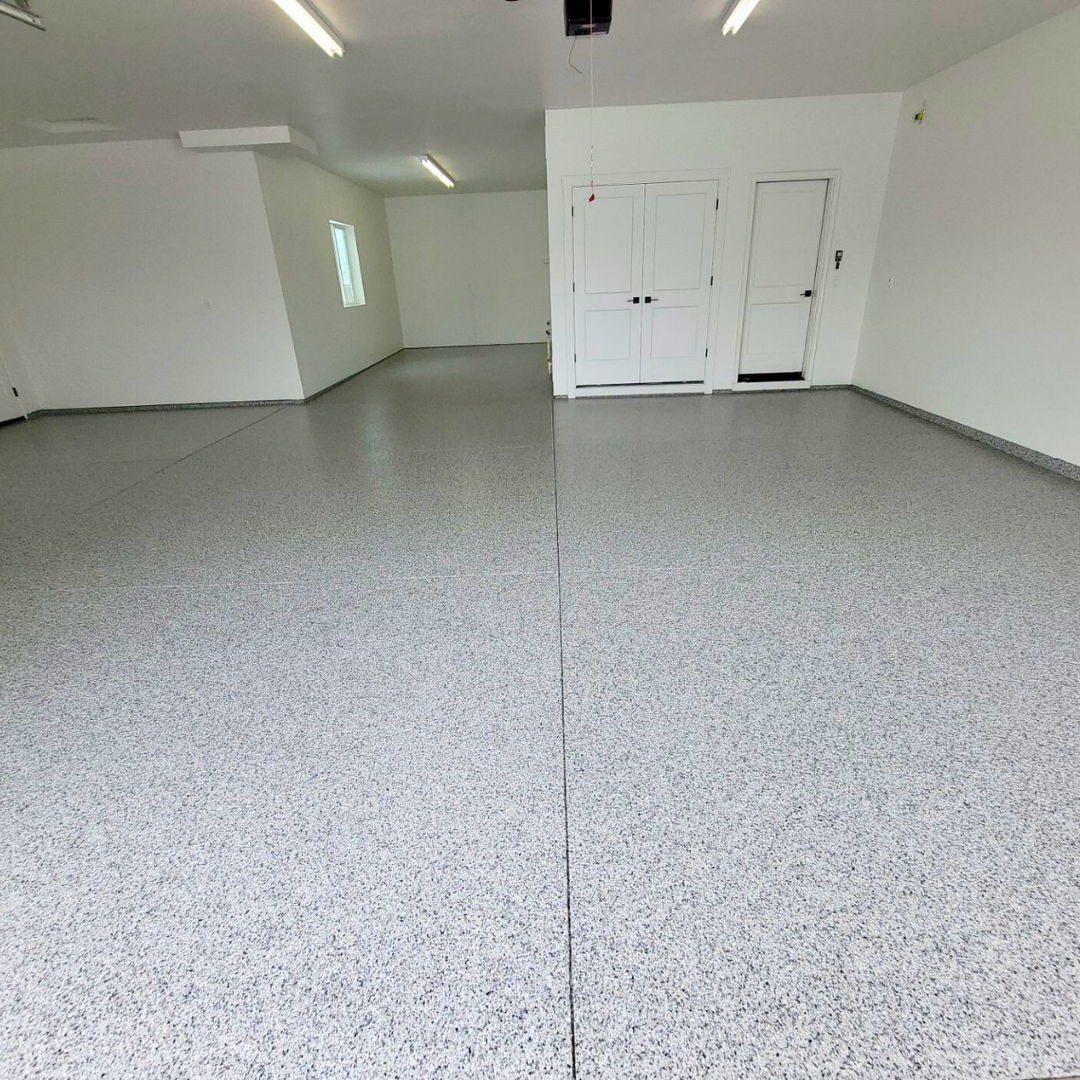
Many homeowners refer to all coated garage floors as epoxy floors, but many modern professional systems use polyurea or polyaspartic materials for added durability, flexibility, and chemical resistance. These systems are designed for real garage use, but they are still coating systems with a finished top layer.
Modern tires contain oils, softeners, and plasticizers that help keep the rubber flexible. Over time, those compounds can slowly transfer from the tire into the clear top coat of the garage floor coating. This is often called plasticizer migration.
The result can be black marks, smoky discoloration, yellowing, or tire-shaped outlines. In decorative chip floors, the flakes underneath are usually not the issue. The discoloration is often happening in the clear top coat above the flakes.
Heat Is Not the Only Reason Tire Marks Happen
A lot of homeowners assume tire marks only happen because tires are hot after driving. Heat can contribute, but it is not the only factor.
Staining can also happen from pressure, long surface contact, vehicle weight, and the chemical makeup of the tire. When a vehicle sits in the same spot for long periods, the tire has more time to interact with the coating surface. Over time, that contact can leave visible marks.
This is why tire staining may happen even when the garage is used normally. The floor is not necessarily being abused. The tire compounds are simply interacting with the coating in a way that becomes visible.
Some Tires Are More Likely to Leave Stains
Not all tires affect garage floor coatings the same way. Some homeowners never notice tire staining, while others see marks much sooner depending on the vehicle and tire type.
Tire staining can be more common with:
- electric vehicle tires
- high-performance tires
- Z-rated tires
- heavy trucks and SUVs
- brand-new tires
- softer rubber compounds
Electric vehicle tires can be more prone to leaving marks because they are often designed for heavier vehicle weight and quieter driving. Those softer rubber compounds may contain more oils and additives. New tires can also leave more residue during the first several hundred or thousand miles because of manufacturing oils or release agents from the factory.
Can Regular Cleaning Help?
Regular cleaning can help reduce buildup and make tire marks easier to manage. It may not completely prevent staining from certain tire compounds, but it can reduce how much residue sits on the surface over time.
Simple maintenance habits can help:
- sweep the garage floor regularly
- clean tire parking areas periodically
- remove road salt, dirt, and oils before they sit too long
- clean fresh tire residue sooner rather than later
This is especially helpful in Boise-area garages that deal with winter road grit, moisture, and seasonal debris. The longer contaminants sit, the harder they may be to remove later.
Can Tire Stains Be Removed?
Sometimes tire stains can be reduced or removed, especially if they are addressed early. Other times, the marks may only lighten. The result depends on the type of tire, how long the stain has been there, the color and finish of the coating, and how deeply the residue has moved into the top coat.
Cleaning options that may help include denatured alcohol, high-percentage isopropyl alcohol, citrus-based degreasers, and a stiff nylon brush. Always test any cleaner in a small, less visible area first to make sure it does not dull or damage the finish.
Avoid wire brushes, aggressive abrasives, harsh solvents not intended for coatings, and excessive sanding. Those methods can damage the coating surface and create a bigger problem than the original tire mark.
Are Garage Floor Coatings Still Worth It?
Yes. Occasional tire staining does not cancel out the benefits of a professionally installed garage floor coating. A coated floor is still easier to clean than bare concrete, helps reduce concrete dust, improves the look of the garage, and protects the slab from everyday wear.
The important thing is having realistic expectations. A garage floor coating is durable, but it is still exposed to tires, vehicle weight, road residue, cleaning products, and seasonal mess. Cosmetic tire staining can happen even when the coating is otherwise performing well.
For most homeowners, the benefits of a coated garage floor still outweigh the possibility of occasional tire marks.
When Should You Be Concerned?
Dark tire marks alone are usually not a reason to panic. If the coating is still smooth, bonded, and intact, the issue is most likely cosmetic staining or residue.
You should look more closely if the tire marks are paired with peeling, bubbling, flaking, or lifting from the concrete. Those signs may point to actual coating failure rather than ordinary tire staining. If you are unsure, a professional evaluation can help determine whether the issue is cosmetic or something more serious.
How to Reduce Tire Staining Going Forward
You may not be able to prevent every tire mark, but you can reduce the chances of buildup becoming more noticeable. Keep the floor clean, avoid letting road salt and oils sit for long periods, and clean parking areas more often if you have softer tires, a heavy vehicle, or brand-new tires.
Some homeowners also choose to park in slightly different spots from time to time or use protective mats in tire contact areas. That is not always necessary, but it can help if a certain vehicle consistently leaves marks.
Get Clear Guidance on Garage Floor Coating Care
Tire staining can be annoying, but it does not always mean the coating failed. In many cases, the marks are caused by modern tire compounds interacting with the clear top coat over time.
Spray ’n Coat Painting helps homeowners throughout Boise, Meridian, Nampa, and the Treasure Valley understand garage floor coating performance, maintenance, and long-term expectations. If you have questions about tire marks, cleaning methods, or a new garage floor coating, reach out to request an estimate or consultation.