Painting Oak Cabinets: Will the Wood Grain Still Show?
Last Updated: October 2, 2026
Oak cabinets are strong, durable, and common in many kitchens, but their visible grain often raises an important question before refinishing: will the wood grain still show after painting? Many homeowners expect painted oak to look completely smooth, almost like new factory-finished cabinetry, but that is not always how oak behaves.
Oak grain often remains somewhat visible after painting unless additional grain-filling and surface-prep steps are used. The cabinets can still look clean, updated, and professionally finished, but the final result depends on the existing oak, the level of prep, the coating system, and how smooth the homeowner wants the surface to look.
Why Oak Grain Is More Noticeable Than Other Woods
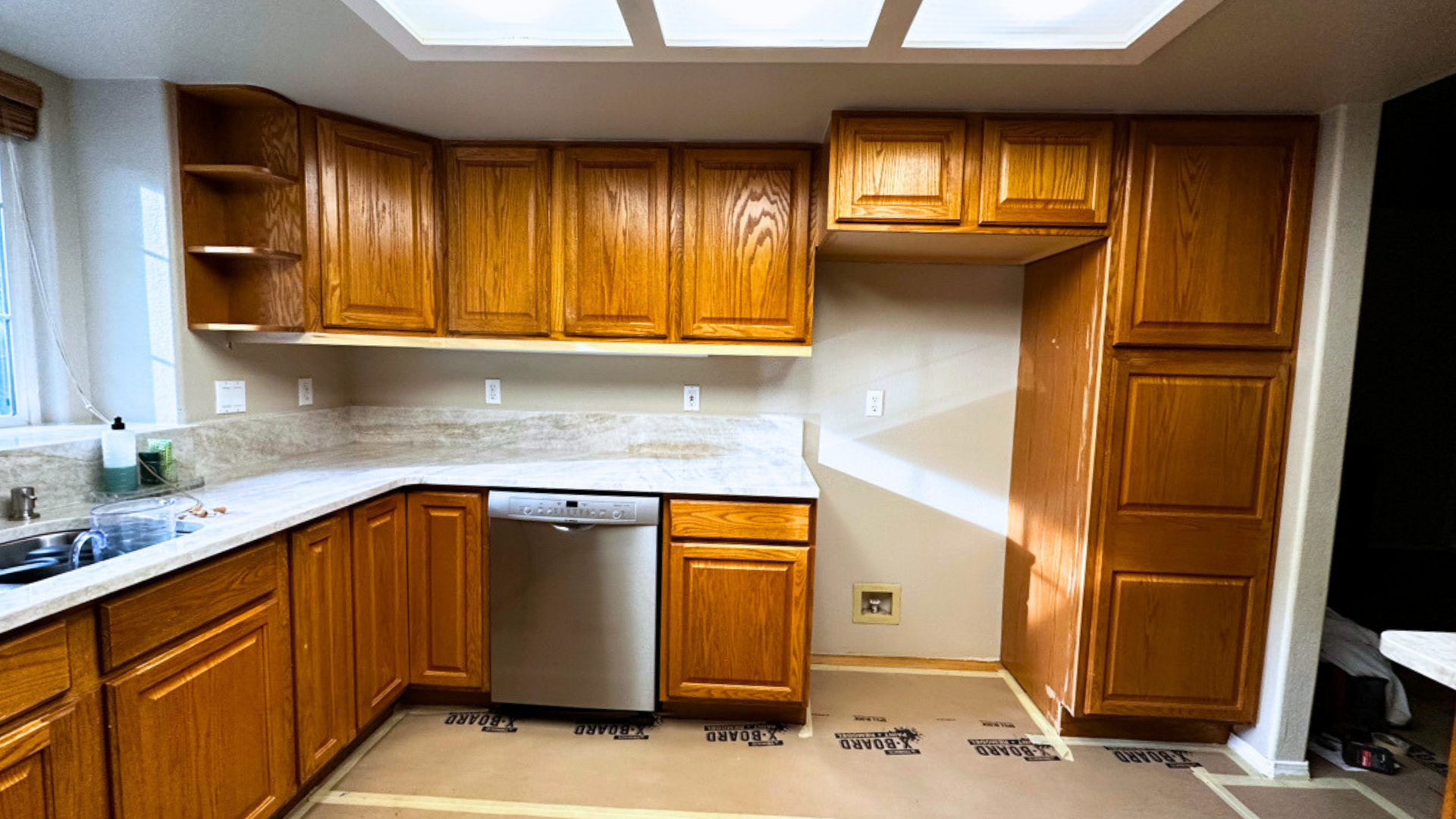
Oak has a pronounced open-grain pattern. If you look closely at oak cabinet doors, drawer fronts, and frames, you can usually see lines, pores, and texture running through the wood. That texture is part of what gives stained oak its recognizable look.
When oak is painted, the color changes, but the underlying texture does not automatically disappear. Paint covers the wood, but it does not fill every groove and pore on its own. This is why oak can still show grain even after a professional cabinet painting project.
That does not mean the paint job is poor. It simply means the wood has a naturally textured surface that needs extra work if the goal is to reduce or hide the grain more completely.
What Painted Oak Cabinets Usually Look Like
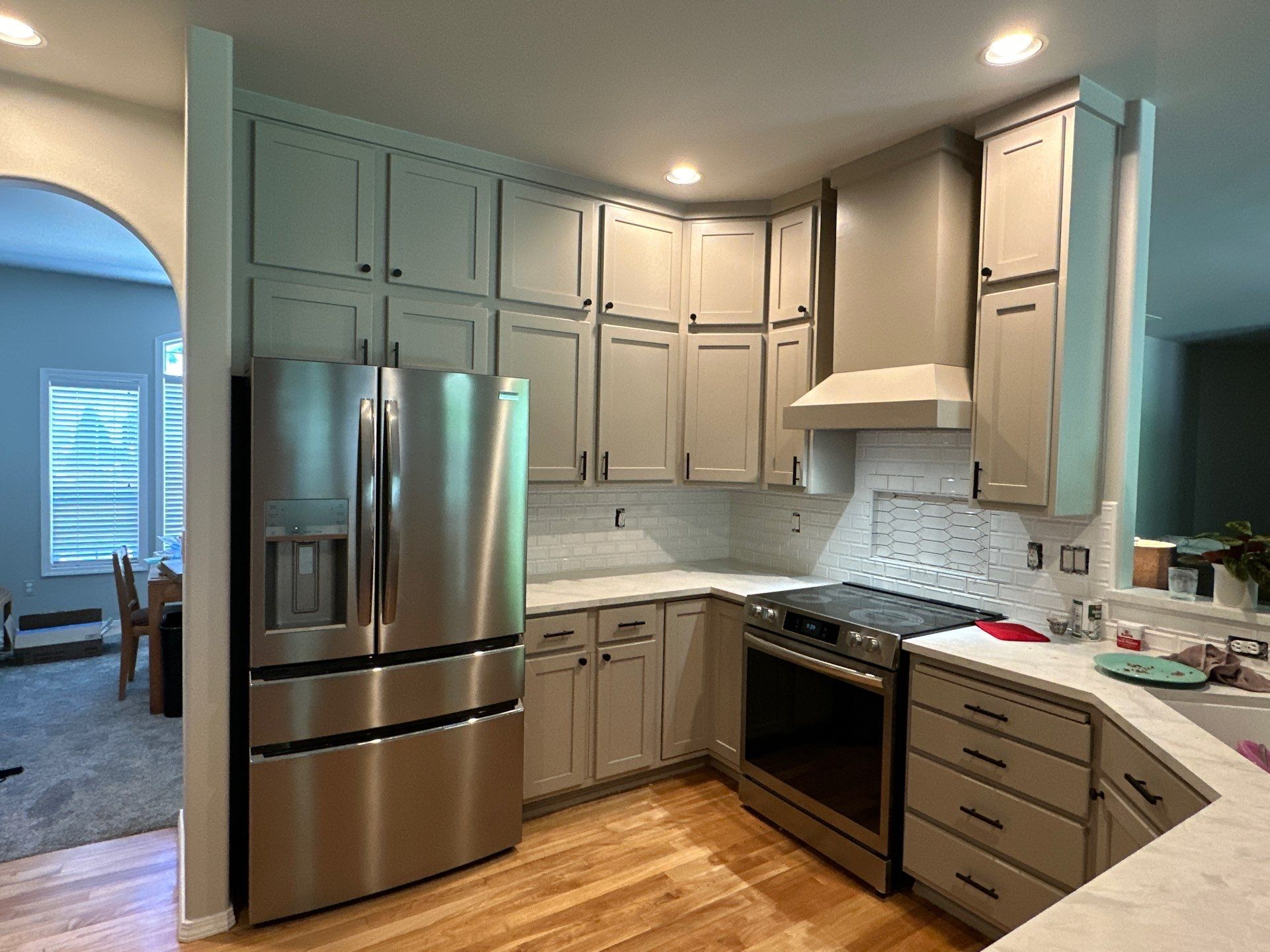
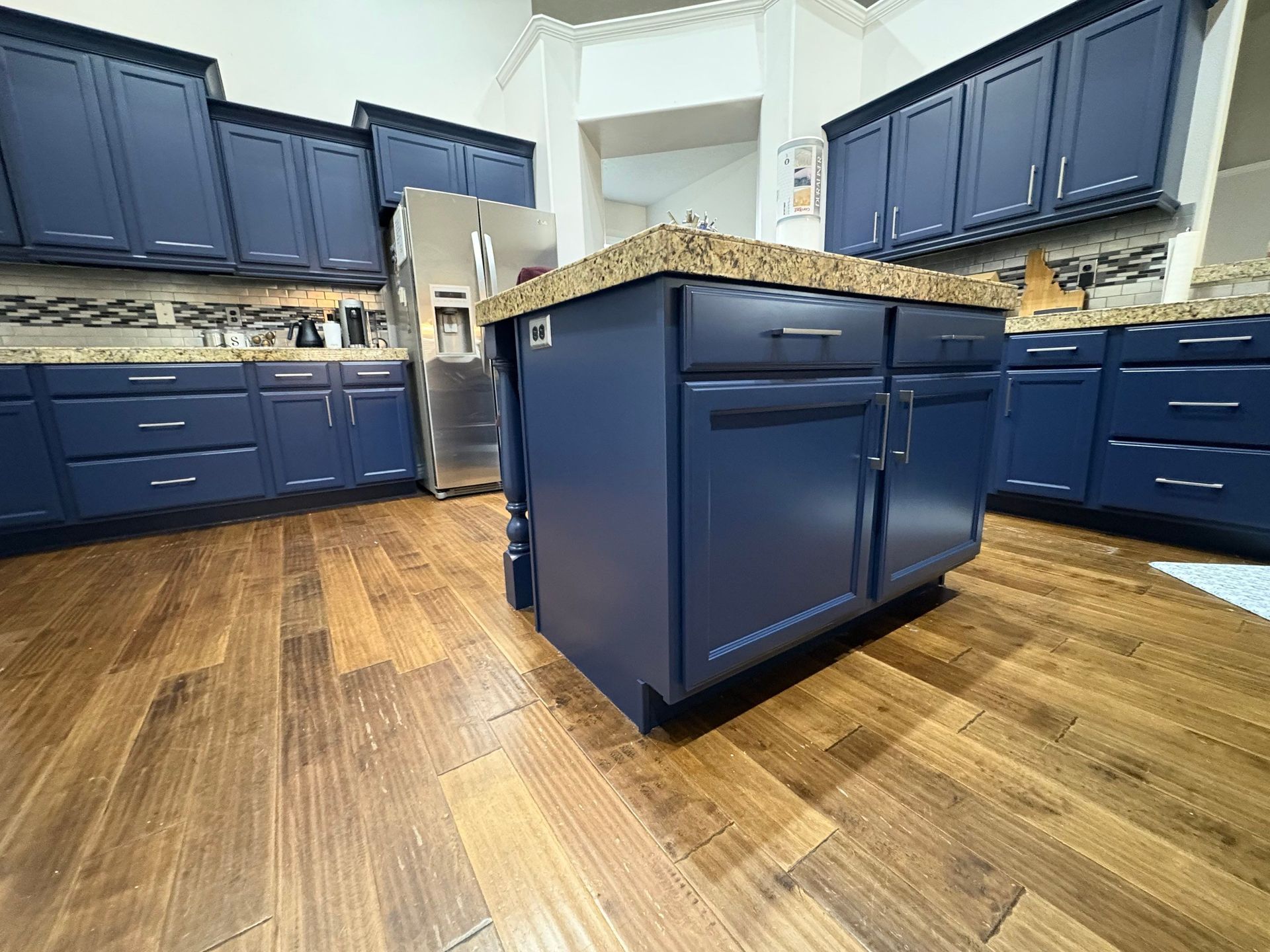
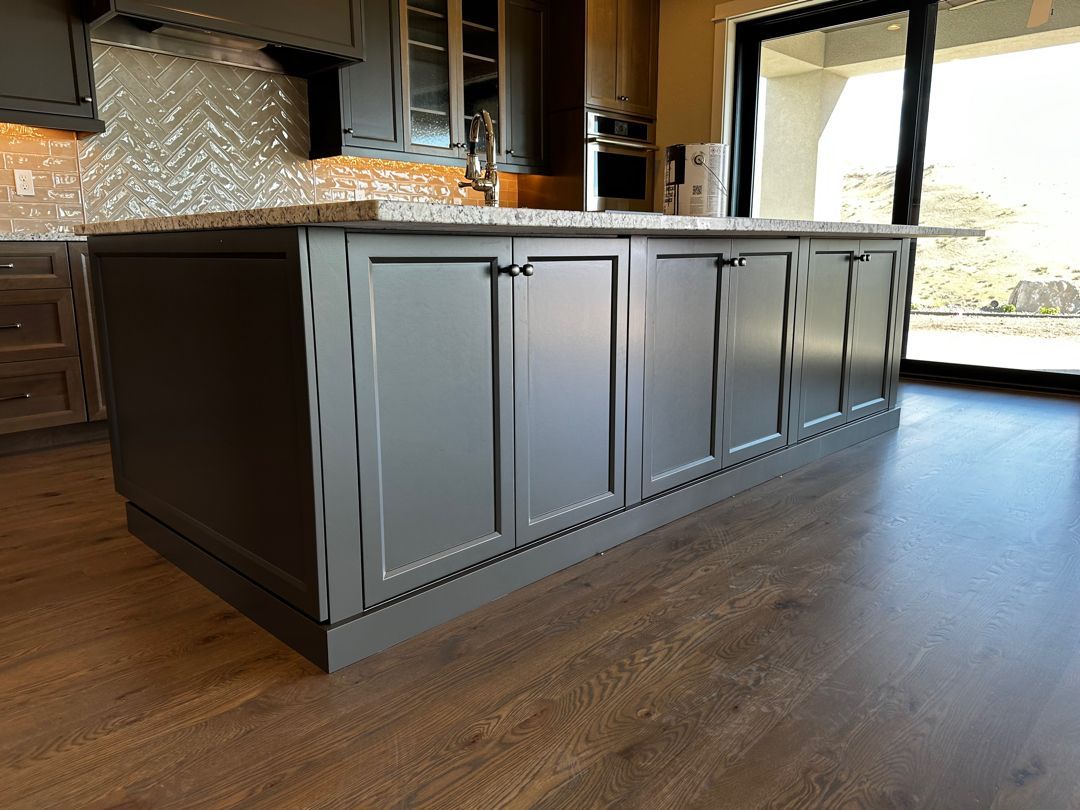
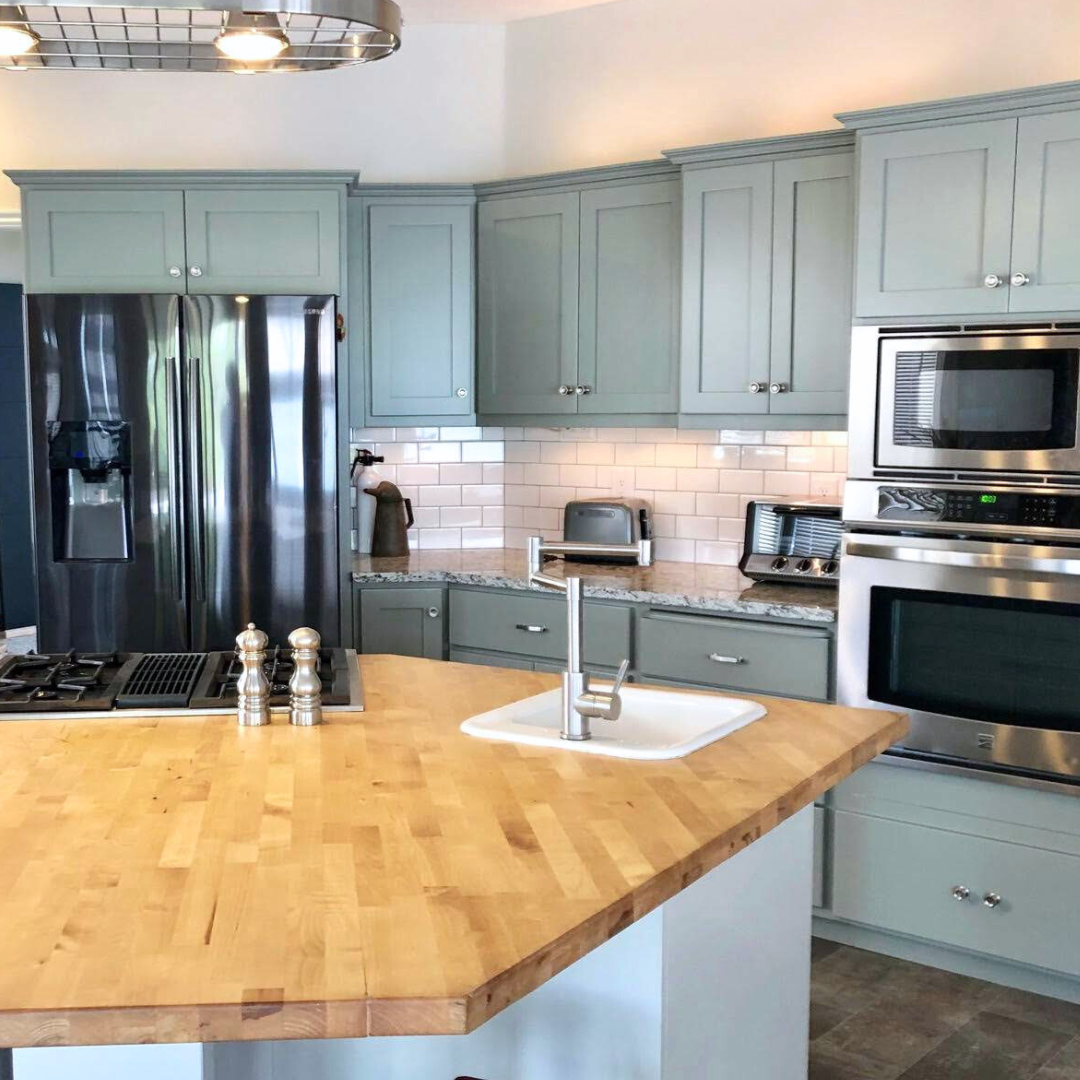
Professionally painted oak cabinets can make a kitchen look much brighter, cleaner, and more current. The stain color disappears, the cabinets feel more coordinated with the rest of the room, and the overall appearance can change dramatically.
Without extensive grain filling, the finish may still show subtle wood texture when viewed up close or under side lighting. From across the kitchen, the cabinets may look smooth and refreshed. Up close, the grain pattern may still be visible beneath the paint.
For many homeowners, this is perfectly acceptable. They want the warmth and durability of their existing oak cabinets, but with a color that feels more updated. Visible grain is not automatically a flaw. It is often part of what painted oak looks like unless the project includes a higher level of surface smoothing.
How Much Grain Shows Depends on the Prep
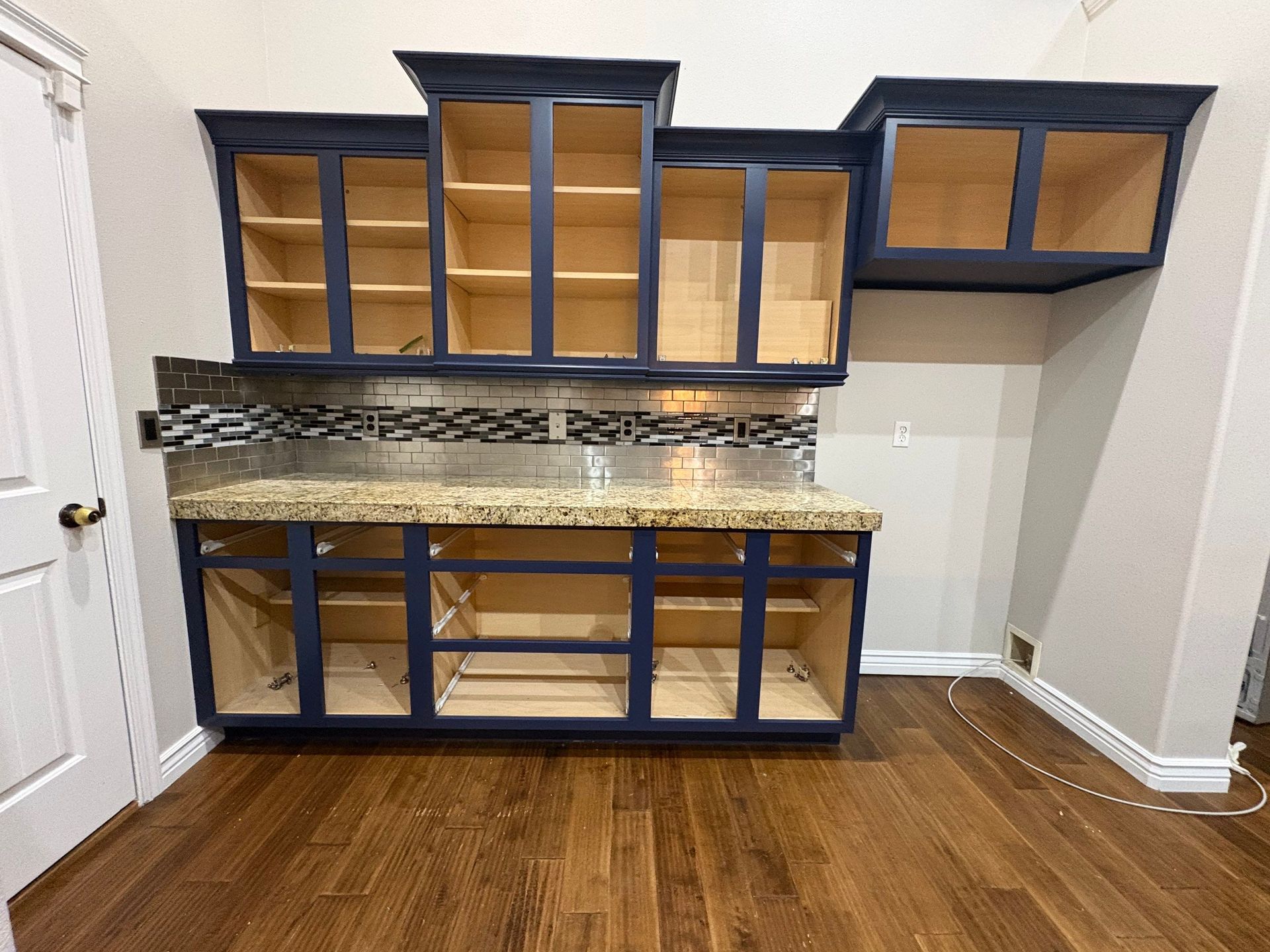
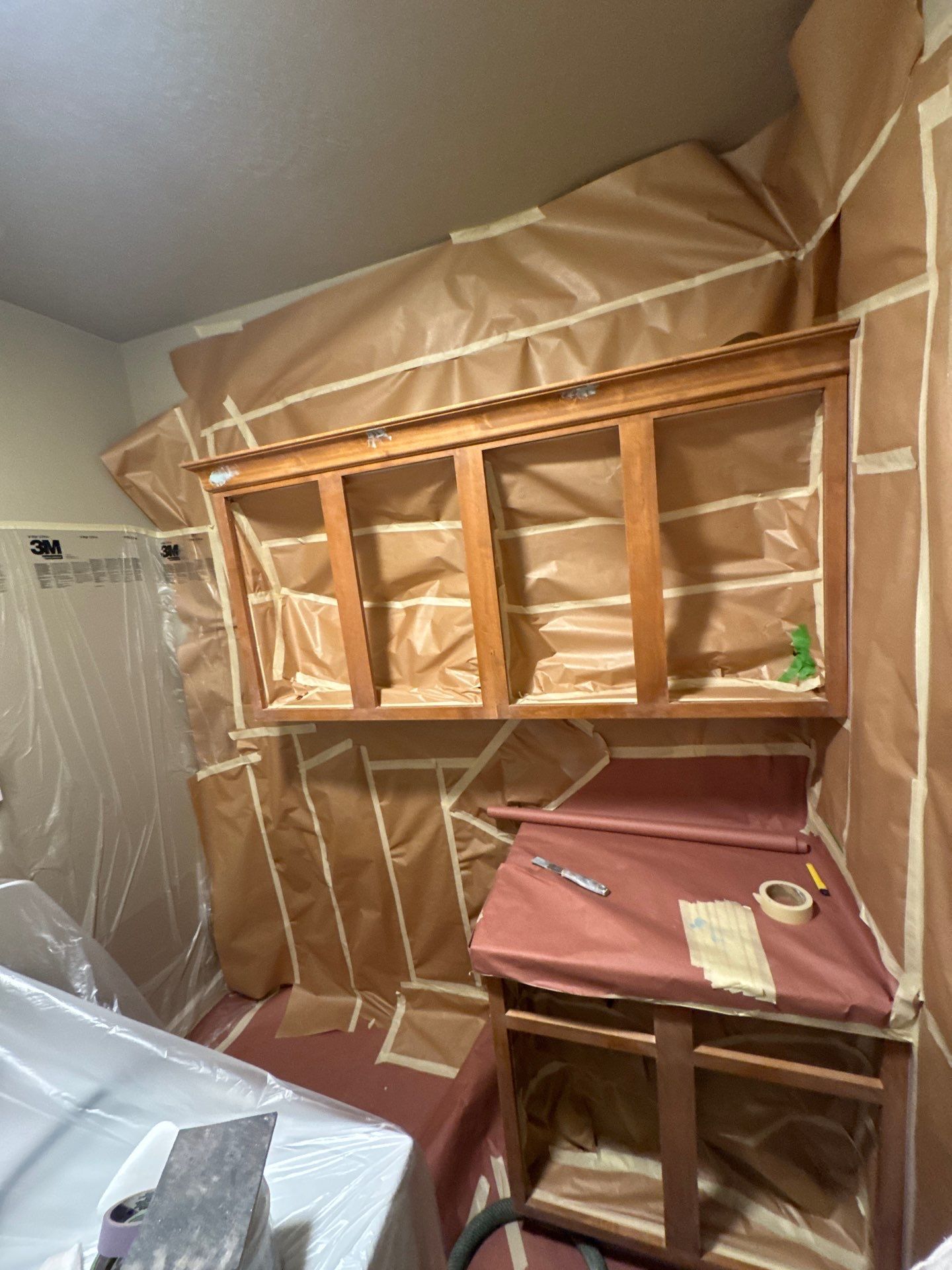
Preparation plays a major role in how noticeable the oak grain will be after painting. Cabinet painting is not just about applying a new color. The surface needs to be cleaned, sanded or deglossed, primed, and finished with products designed for cabinetry.
The more smooth and uniform the surface is before painting, the smoother the final result can look. However, different prep levels create different outcomes, and homeowners should understand those differences before the project begins.
Standard Prep
Standard professional prep focuses on adhesion, cleanliness, and finish quality. It may include degreasing, sanding, repairing minor imperfections, priming, and applying cabinet-grade coatings.
This approach can create a durable and attractive finish, but it usually does not eliminate oak grain completely. Homeowners who are comfortable with some natural wood texture showing through the paint may be very happy with this result.
Grain Filling
Grain filling is an added step used to reduce the depth and visibility of the oak grain before priming and painting. A grain filler is worked into the open pores of the wood, then sanded so the surface becomes smoother before the finish coats are applied.
This can significantly reduce the grain pattern, but it adds labor and may not make every cabinet door look exactly like MDF or a factory-laminated surface. Grain filling improves smoothness, but the final result still depends on the wood, door style, lighting, and finish expectations.
A Smooth Finish and a Factory-Smooth Finish Are Not the Same Thing
A professionally painted oak cabinet can be smooth, clean, and beautiful without looking identical to a factory-made cabinet door. Materials like MDF or certain manufactured cabinet doors start with a naturally smoother surface, so they can look flatter under paint.
Oak starts with more texture. Even with careful sanding, priming, and coating, the wood underneath can influence the final appearance. This is not a weakness of painted oak. It is simply a different finish expectation.
The key is knowing what you want before refinishing begins. If you expect a completely flat, factory-smooth surface, grain filling or new doors may need to be part of the conversation. If you are comfortable with a subtle wood-grain look, painting the existing oak may be a strong option.
Color and Sheen Can Affect How Much Grain You Notice
The color and sheen you choose can also affect how visible the grain appears. Strong side lighting, darker colors, and higher-sheen finishes may make surface texture easier to see. Softer colors and lower-sheen cabinet finishes may make the grain less noticeable.
Lighting matters too. A cabinet door that looks very smooth straight on may show more texture when light hits it from the side. This is common with many painted surfaces, but oak makes it more noticeable because of its natural grain.
This does not mean one color or sheen is always better. It means the final choice should consider both style and how much texture you are comfortable seeing.
Some Homeowners Prefer to Keep a Little of the Oak Texture
Not everyone wants oak grain completely hidden. Some homeowners like that painted oak still has a little character and depth. The cabinets feel updated, but they do not look flat or overly manufactured.
This can be especially appealing when the cabinets are well built and still function properly. Painting allows homeowners to keep the quality and layout they already have while changing the part they dislike most: the dated stain or color.
In that sense, the question is not always how to hide oak grain completely. Sometimes the better question is how much grain you are comfortable seeing in the finished kitchen.
When Grain Filling Is Worth the Extra Work
Grain filling may be worth considering if you strongly prefer a flatter, more uniform finish. It can also make sense if you are choosing a style where visible wood texture would feel distracting or inconsistent with the rest of the kitchen.
For example, if you want a clean, modern painted cabinet look and do not want the cabinets to read as oak at all, grain filling may be worth the added scope. If you are mainly trying to move away from golden oak or dark stain and are comfortable with subtle texture, standard professional prep may be enough.
The best choice depends on your expectations, budget, and desired finish level.
Existing Damage and Wear Still Need Attention First
Grain filling is not a substitute for repairing damaged cabinets. Chips, deep scratches, peeling finish, loose veneer, water damage, or worn edges should be addressed before the final finish plan is chosen.
If the cabinet surface is unstable, paint and grain filler will not solve the underlying problem. The doors, drawer fronts, and cabinet boxes need to be in good enough condition for refinishing to make sense.
This is why a cabinet evaluation matters before deciding on paint, primer, grain filler, or finish options. The right process depends on the actual condition of the cabinets, not just the fact that they are oak.
Seeing a Sample Can Make the Decision Easier
Because finish expectations can vary so much, a sample can be very helpful. A sample door, test section, or comparable finished project can show how much grain is likely to remain visible and whether that look feels right for your kitchen.
Photos can help, but seeing the texture in person is often more useful. Grain visibility changes depending on lighting, angle, color, and sheen. Looking at a realistic example before the full project begins can prevent misunderstandings later.
Good communication upfront helps homeowners choose the finish level that fits their expectations.
Boise Homeowners Often Have Oak Cabinets That Are Still Worth Keeping
Many Boise area kitchens have oak cabinets that are structurally solid but cosmetically dated. The layout may still work, the boxes may be strong, and the doors may be in good condition, even if the stain no longer fits the homeowner’s style.
In these situations, professional refinishing can offer a major visual update without replacing cabinets that still have years of use left. The important part is deciding whether you want to embrace some of the oak’s natural texture or invest in additional steps to reduce it.
Get the Finish You Expect with Spray ’n Coat
Painting oak cabinets can be a great way to update a kitchen, but homeowners should understand that oak grain may still show unless additional grain-filling work is included. The best result starts with realistic expectations, careful prep, and the right coating system for cabinetry.
Spray ’n Coat Painting helps homeowners throughout Boise, Nampa, Meridian, and the
Treasure Valley evaluate oak cabinets and choose the right cabinet painting approach. If you are wondering how much grain will show through your painted oak cabinets, request an estimate or evaluation to review your options before refinishing begins.