How to Fix a Peeling Epoxy Garage Floor Coating (and why it happens)
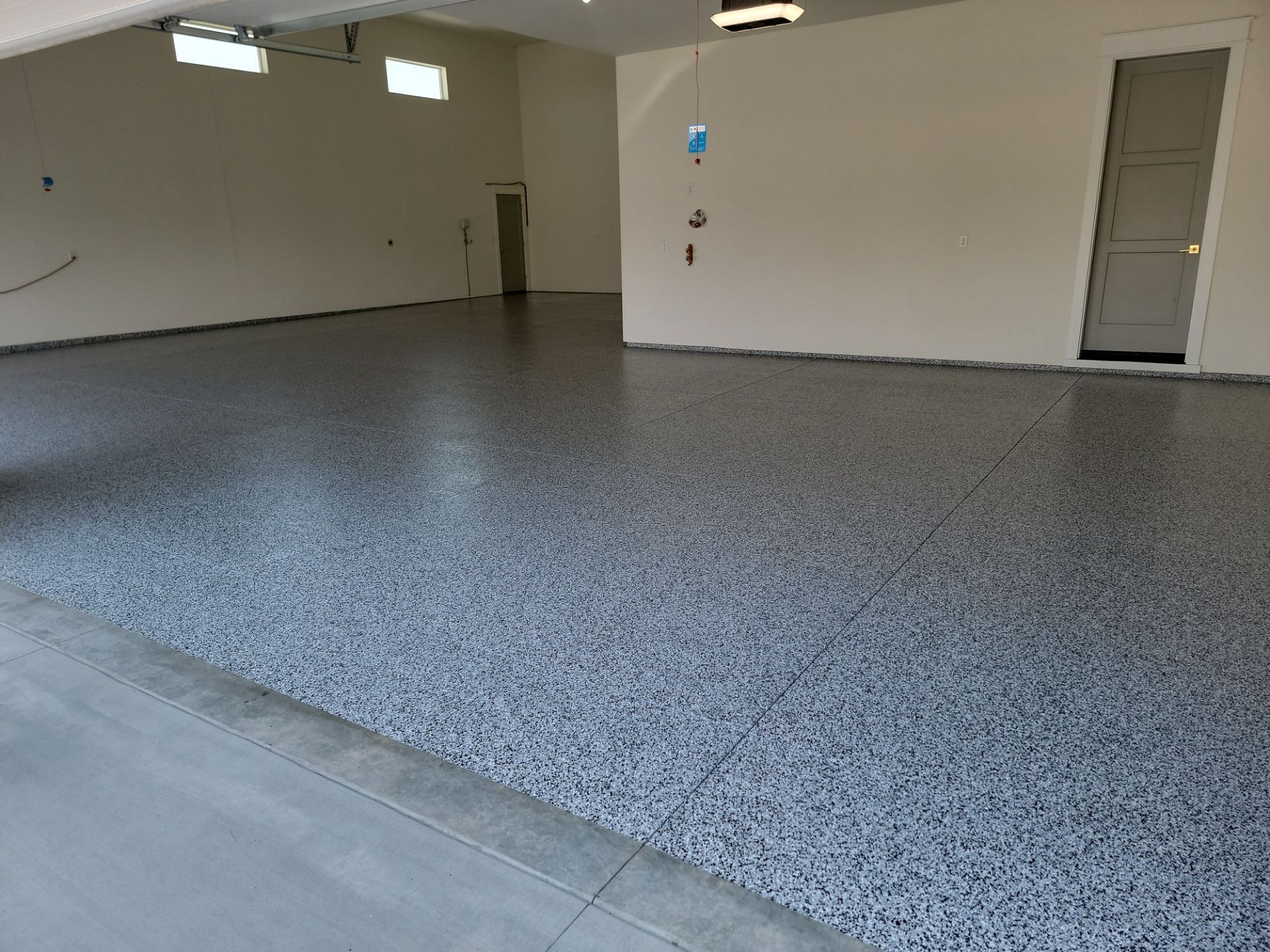
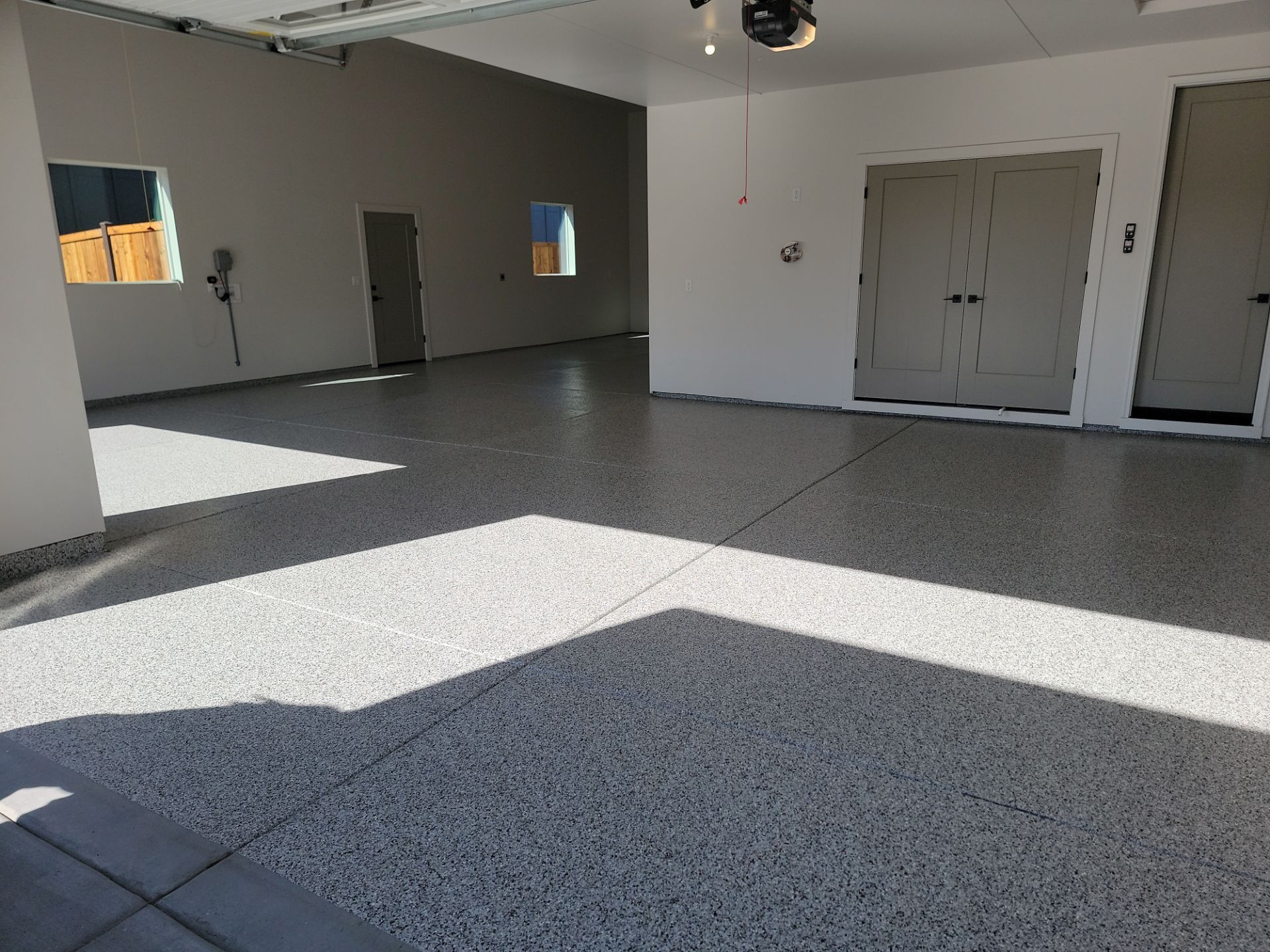
When installed correctly, epoxy and polyaspartic floor coatings can last for years. But if you’ve ever seen a garage concrete floor coating peeling, lifting, or bubbling, you know how frustrating it can be. Almost every failure comes back to two things: hidden moisture or improper prep. Here’s what’s really happening under the surface—and how to get a coating that holds up to Idaho weather, daily traffic, and hot tires.
Moisture vapor pressure: the thing nobody sees coming
Concrete looks solid, but it absorbs moisture like a big sponge. If there’s a moisture source beneath the slab—like irrigation runoff, poor drainage, or just natural ground moisture—that water doesn’t stay put. When the surface heats up, that moisture wants to escape upward through the concrete.
This upward movement creates moisture vapor pressure, and Mark (our owner at Spray ’n Coat Painting) explains it the same way during our on-site estimates:
- As the slab warms up, moisture pushes up toward the surface
- That pressure hits the underside of the coating
- Most coatings can only handle
5–10 pounds of vapor pressure
- Premium systems can handle
up to 25 pounds
- When the moisture pressure is stronger than the coating can tolerate, the bond breaks
- That’s when you see bubbling, blistering, or peeling
Moisture vapor pressure isn’t the most common cause of garage floor failure here in the Treasure Valley, but it does show up—especially in older homes, homes near irrigated landscaping, or patios and pool decks where moisture sits just below the surface.
The #1 cause of peeling garage floors: poor prep
Far more often, peeling occurs because the concrete wasn’t properly prepped before the coating was installed. Proper surface preparation makes or breaks the project.
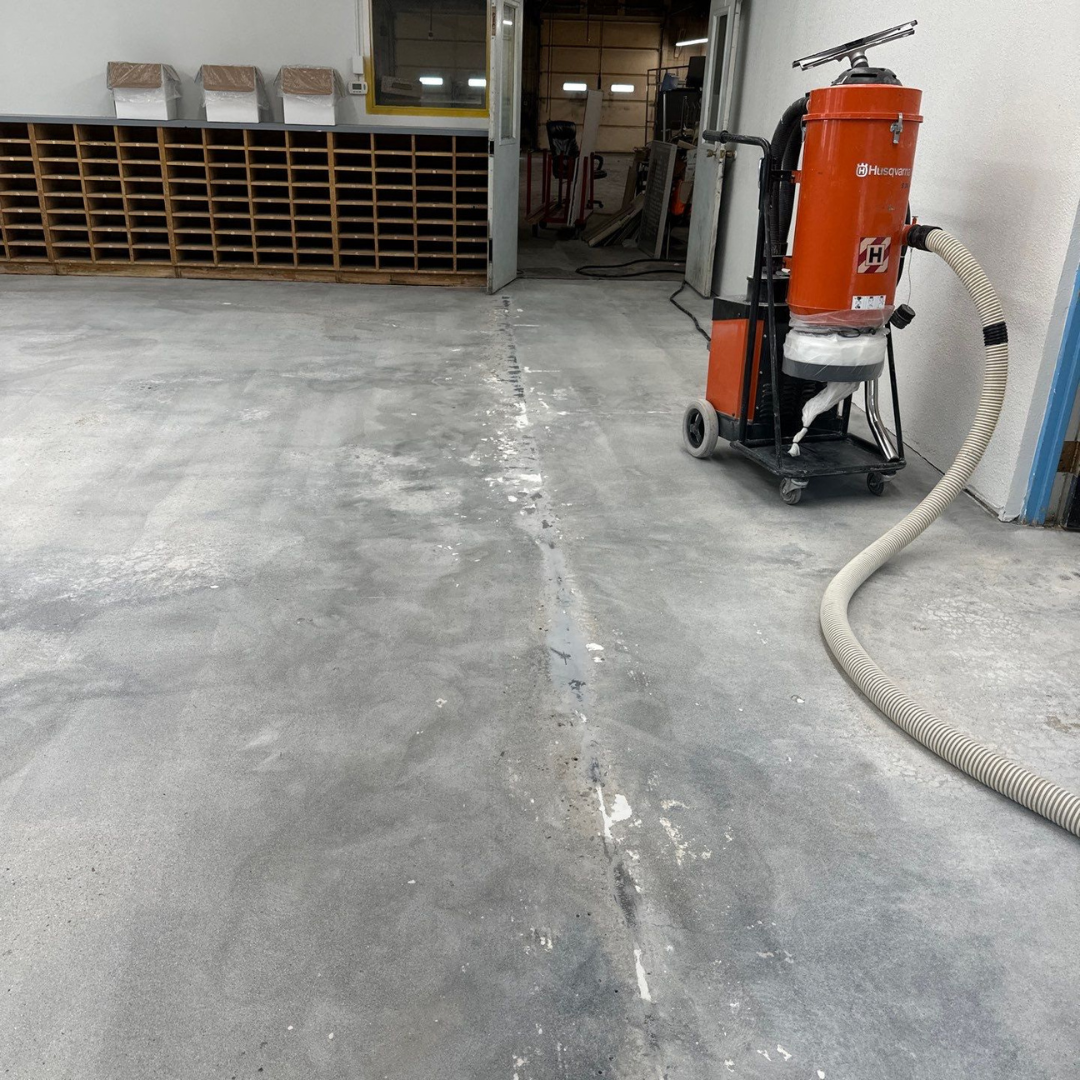
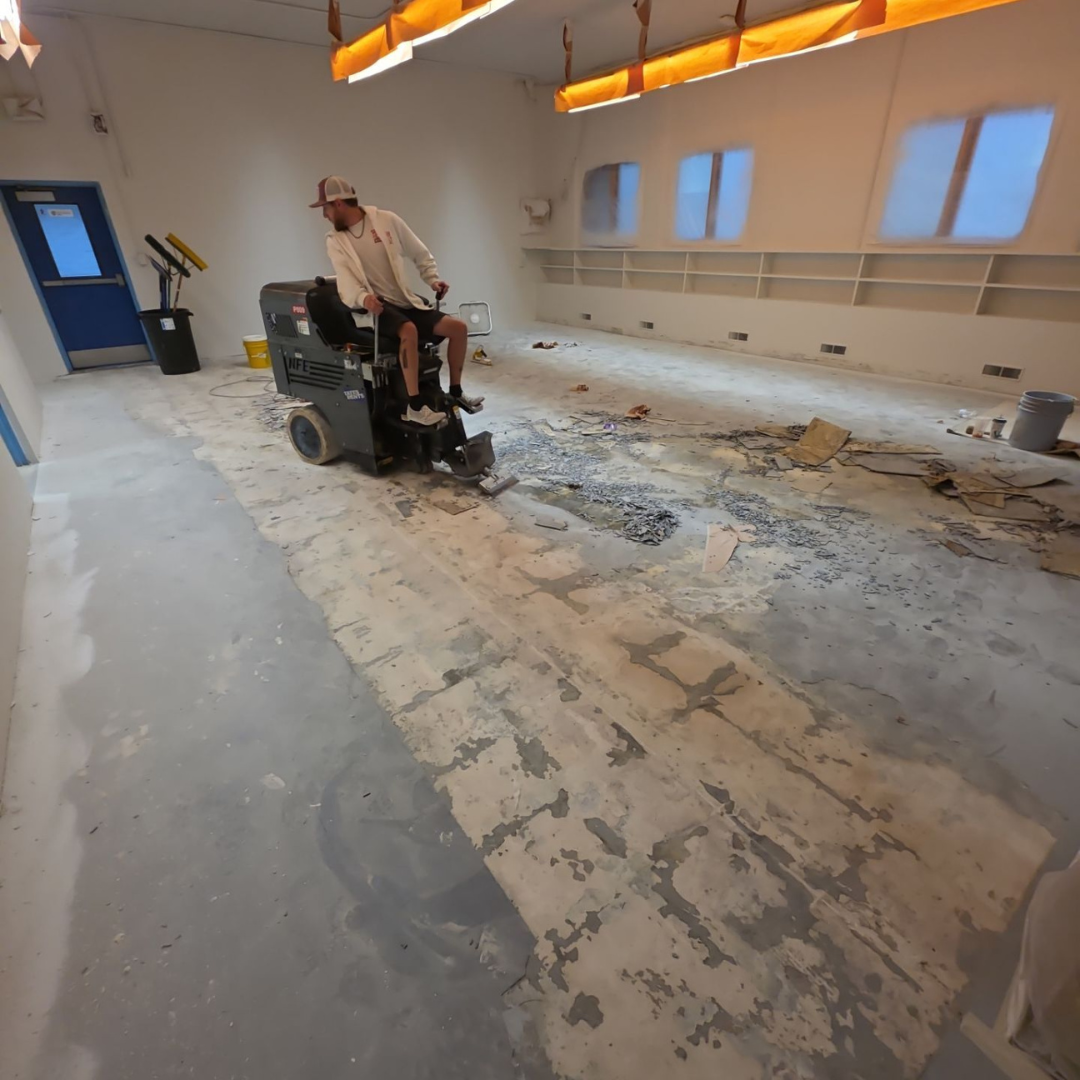
Epoxy and polyaspartic coatings need a rough, porous concrete surface to bond to. The most reliable way to get that is by diamond grinding the concrete. Grinding removes the weak top layer and opens the pores, allowing the coating to soak in and cure tightly to the slab.
The problem? Many DIY kits and even some contractors skip grinding and use one of these instead:
- Degreasers
- Pressure washing
- Muriatic acid etching
- “Concrete prep” chemicals
These don’t create a consistent profile. And if there are sealers or previous coatings on the concrete, acid etching does almost nothing. Even on bare concrete, acid rarely makes the concrete surface rough enough for strong adhesion.
That’s why Spray ’n Coat Painting always mechanically grinds the surface—it’s the only way to ensure the coating has something solid to grip. When the prep isn’t done right, peeling is inevitable, even with high-quality products.
What peeling garage floors look like
If you’re dealing with a failing garage floor coating now, you’ll probably see:
- Flaking or lifting at the edges
- Larger patches coming loose by hand
- Blistering or bubbling under the coating
- Hot-tire pickup where vehicles sit
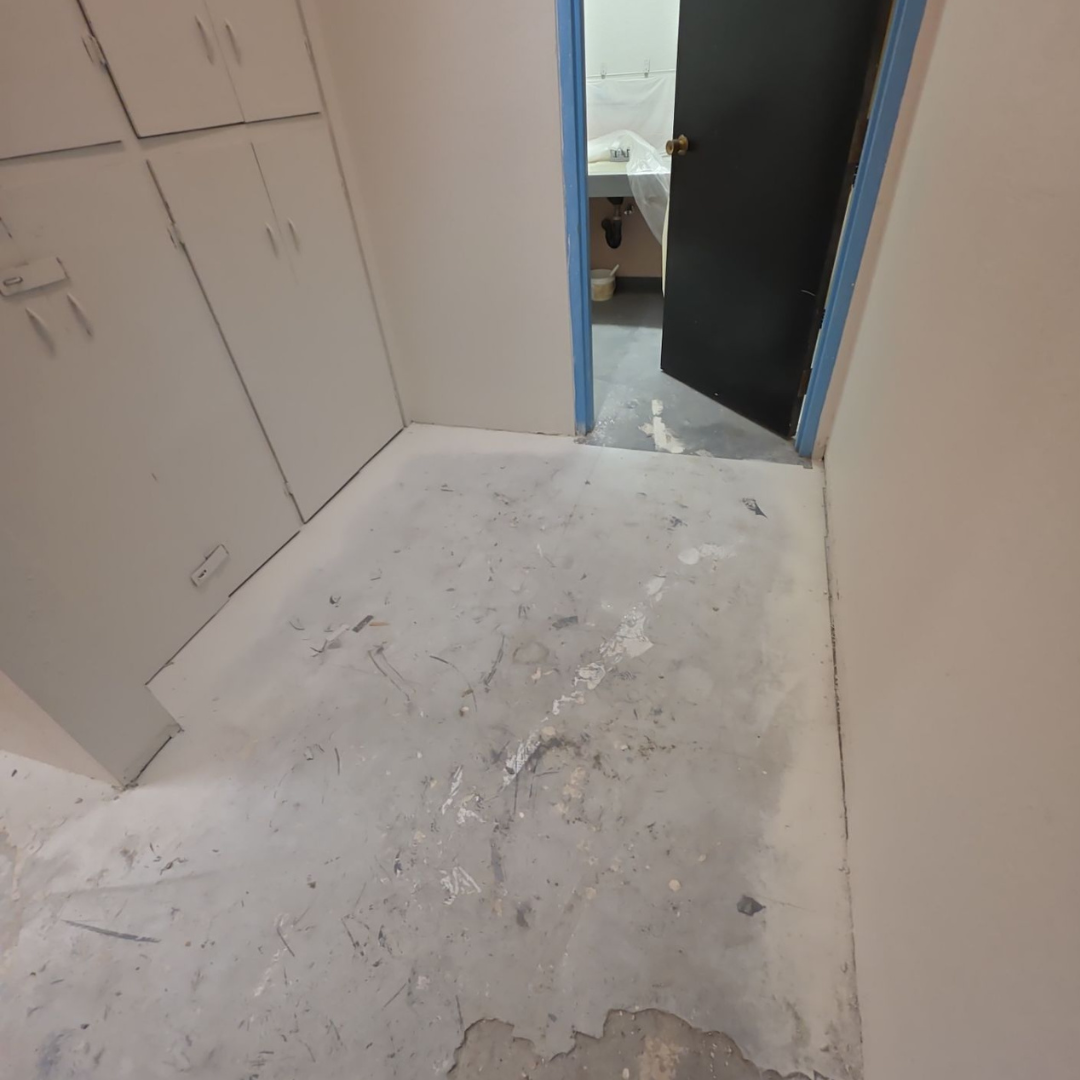
- Dusty, chalky concrete under the peeled areas
Once the bond is gone in one spot, the surrounding areas usually aren’t far behind.
How to prevent garage floor coating failure
Whether you’re upgrading a garage in Boise, refreshing a patio in Meridian, or fixing a pool deck in Nampa, a long-lasting coating comes down to a few key steps:
- Check for moisture issues — We can test vapor emission before installation.
- Mechanically grind the concrete — No shortcuts, no acid etching.
- Use the correct coating system — Different situations call for different primers and topcoats.
- Choose a professional-grade system — Not a low-grade DIY kit from the hardware store.
At Spray ’n Coat Painting, our garage floor coatings are designed to hold up to Idaho’s freeze-thaw cycles, summer heat, and the daily wear-and-tear that comes with real life. We never skip prep, and we never rush the process. That’s why homeowners and commercial property owners throughout the Treasure Valley continue to trust our team year after year.
For more details on how our floor coating process works, check out our
Garage Floor Coatings page. Have questions or need a quote? Contact Spray ’n Coat Painting or fill out a request form to schedule a free on-site estimate.