How Long Do Garage Floor Coatings Really Last in Boise? Expectations vs Reality
Last Updated: January 14, 2026
One of the first questions Boise homeowners ask before investing in a garage floor coating is how long it will actually last. You will see claims online ranging anywhere from five years to twenty-plus years, which makes it hard to know what is realistic and what is marketing.
The honest answer is that lifespan of your garage floor coating (either epoxy or polyurea) varies widely based on preparation, coating type, and how the garage is used, not just the coating itself. This article breaks down what really determines longevity in Boise homes so expectations match reality before you invest the money.
Why Lifespan Claims for Garage Floor Coatings Are Often Misleading
Many lifespan claims assume ideal conditions that rarely exist in real garages. Perfectly dry concrete, stable temperatures, minimal vehicle traffic, and controlled environments are often baked into those estimates.
Boise garages do not operate in a vacuum. They deal with winter moisture, temperature swings, road salt, and daily vehicle use. When coatings are installed without accounting for those factors, real-world performance rarely matches the advertised best case.
That is why one homeowner might see failure in a few years while another enjoys a coating that still looks good a decade later. Context matters far more than the headline number.
What Actually Determines How Long a Garage Floor Coating Lasts
Garage floor coatings do not fail randomly. Their lifespan is driven by a few key factors that homeowners can influence, especially before installation.
Surface Preparation and Concrete Condition
Surface preparation is the foundation of longevity. Mechanical grinding opens the concrete so the coating can bond properly, while crack repair and moisture testing address underlying risks.
When prep is rushed or skipped, lifespan drops dramatically. Even high-end coatings will fail early if they are applied over contaminated, smooth, or moisture-prone concrete.
Type of Coating System Used
Not all coatings perform the same over time. Basic epoxy paint kits are typically the least durable and are most sensitive to moisture and temperature changes. Professional epoxy systems last longer due to better primers, thicker builds, and stronger bonding.
Higher-performance coatings are designed to handle heavier use, seasonal movement, and moisture pressure. The right system depends on how the garage is used and what conditions it faces, not just the desire for the longest lifespan number.
Boise-Specific Factors That Affect Garage Floor Longevity
Local conditions play a real role in how long a coating lasts, and Boise garages have some specific challenges.
Winter Moisture, Snow, and Road Salt
During winter, garages see constant exposure to snowmelt, gravel, and de-icing salts. Moisture sits on the floor longer, and salts work their way into seams and edges.
Over time, this accelerates wear and tests adhesion, especially if the coating was installed without moisture mitigation or proper surface profiling.
Seasonal Temperature Swings
Boise experiences wide temperature swings throughout the year. Concrete expands and contracts as temperatures change, and coatings must stay bonded through that movement.
When coatings are installed under poor temperature conditions or without adequate prep, that movement can lead to cracking, edge lifting, or separation years sooner than expected.
Realistic Lifespan Expectations by Use Case
There is no single lifespan that applies to every garage. How the space is used matters just as much as how it was installed.
Light-use residential garages that see occasional parking and storage often maintain good appearance and performance for many years. Daily vehicle parking and regular use introduce more wear, especially in tire paths and turning areas.
Heavy-duty garages used as workshops or storage for equipment place the most stress on coatings. These floors may show wear sooner but should still remain bonded and functional when installed correctly.
The key distinction is between cosmetic wear and actual failure. Scuffs and surface dulling are normal over time. Peeling and delamination are not.
What Garage Floor Coatings Look Like After 5–10 Years
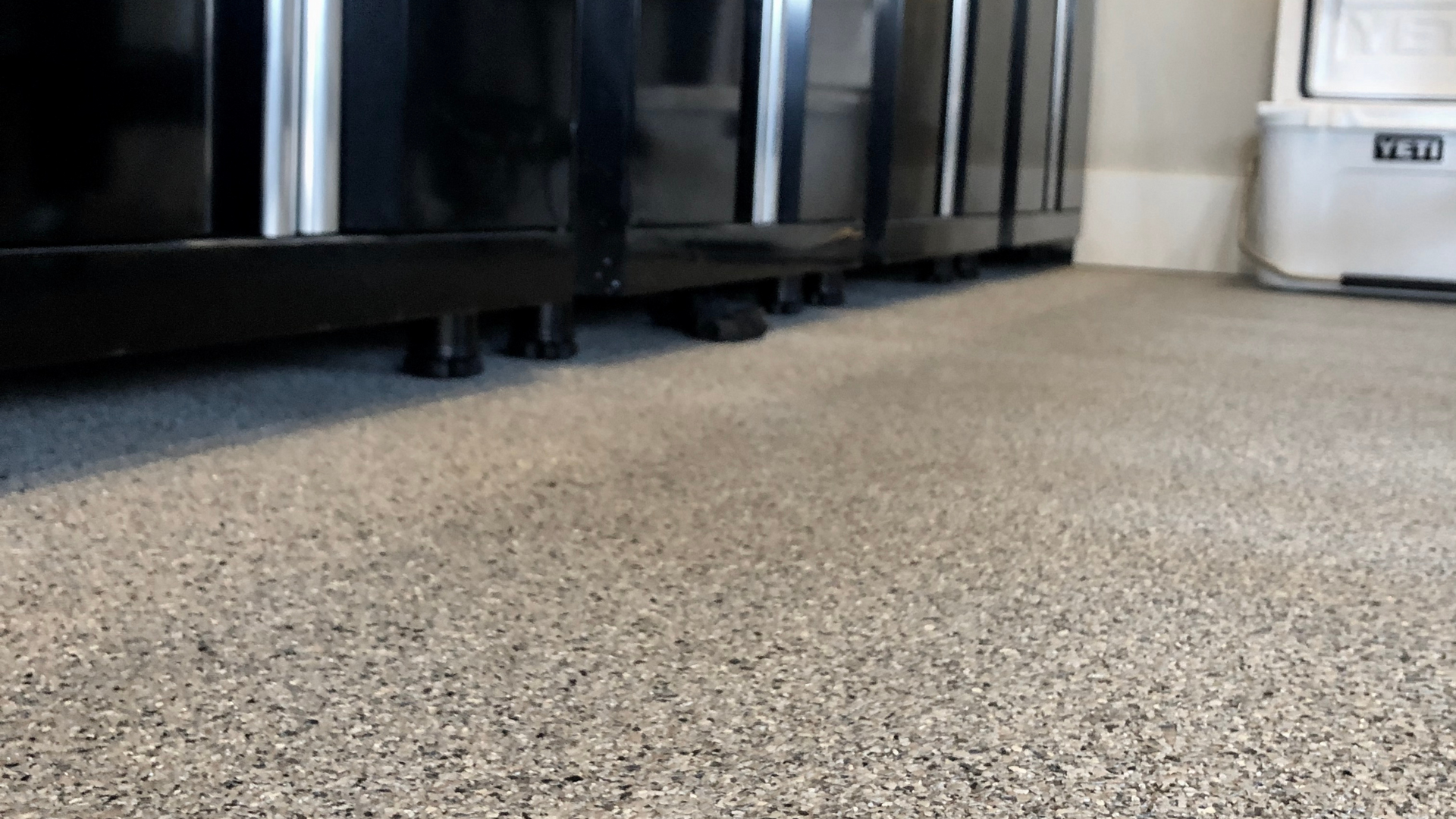
After several years, a properly installed garage floor coating should still be firmly bonded to the concrete. You may see surface wear in high-traffic areas, but the coating should not be lifting, bubbling, or peeling.
Normal aging includes slight loss of gloss or visible wear patterns where vehicles park. Signs of failure include widespread peeling, bubbling, or separation at edges and cracks. Those issues usually trace back to prep or moisture problems, not age alone.
How Professional Installation Extends Coating Lifespan
Professional installation is the biggest controllable factor homeowners can choose. Moisture testing identifies hidden risks. Mechanical grinding creates a surface the coating can actually bond to. System selection matches the coating to the garage environment and usage.
Professionals also control installation timing and curing conditions, which reduces stress on the coating before it fully hardens. These steps do not guarantee perfection forever, but they dramatically increase the odds of long-term success.
We Go Above & Beyond When Installing Floor Coatings
We approach garage floor coatings with realistic expectations, not exaggerated promises. Every garage is evaluated based on concrete condition, moisture levels, climate exposure, and how the space is actually used.
Instead of quoting a generic lifespan, our team helps homeowners understand what they can reasonably expect from their specific garage. If you are considering a garage floor coating in Boise and want honest guidance before investing, schedule an evaluation with Spray ’n Coat Painting and get clarity before committing.